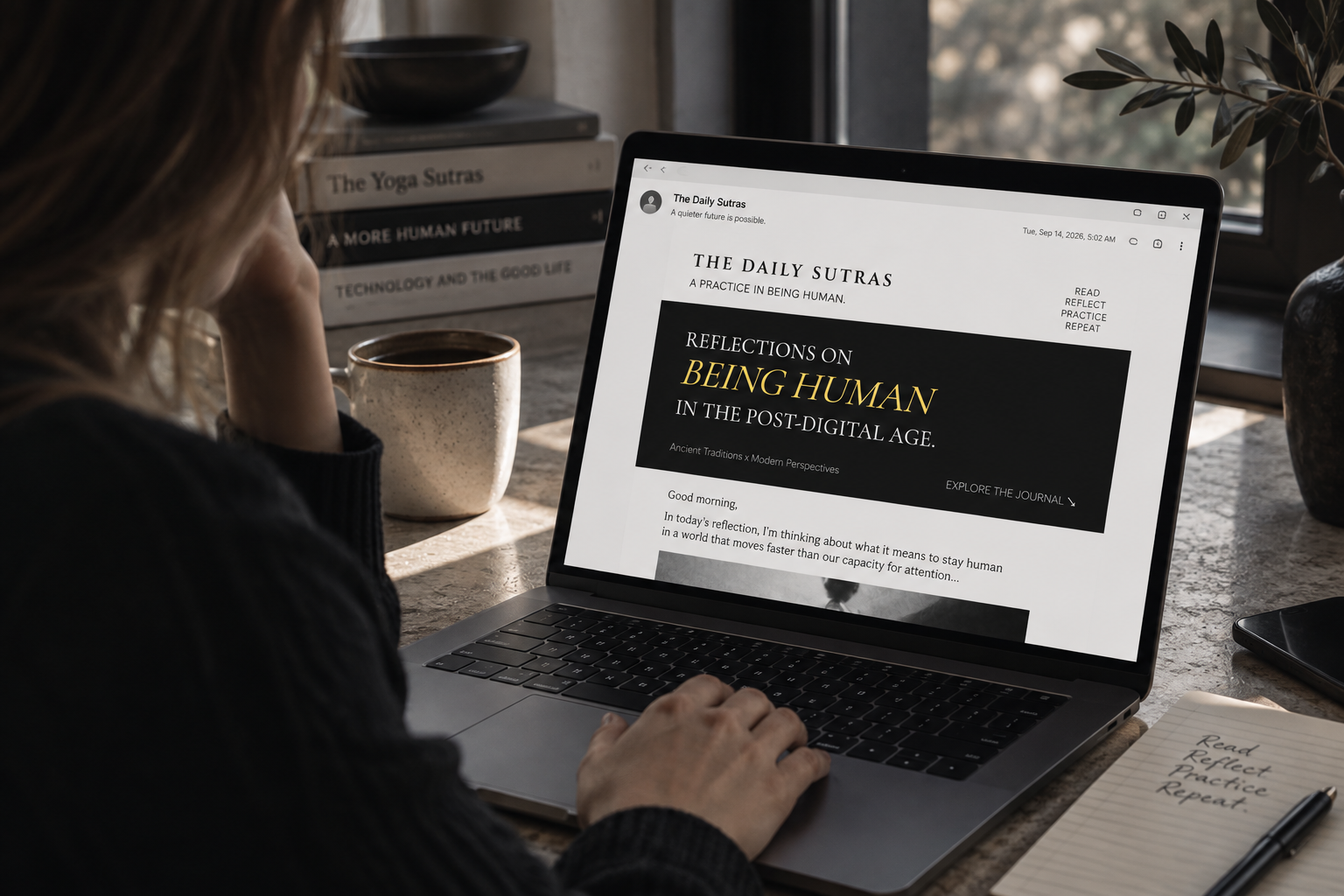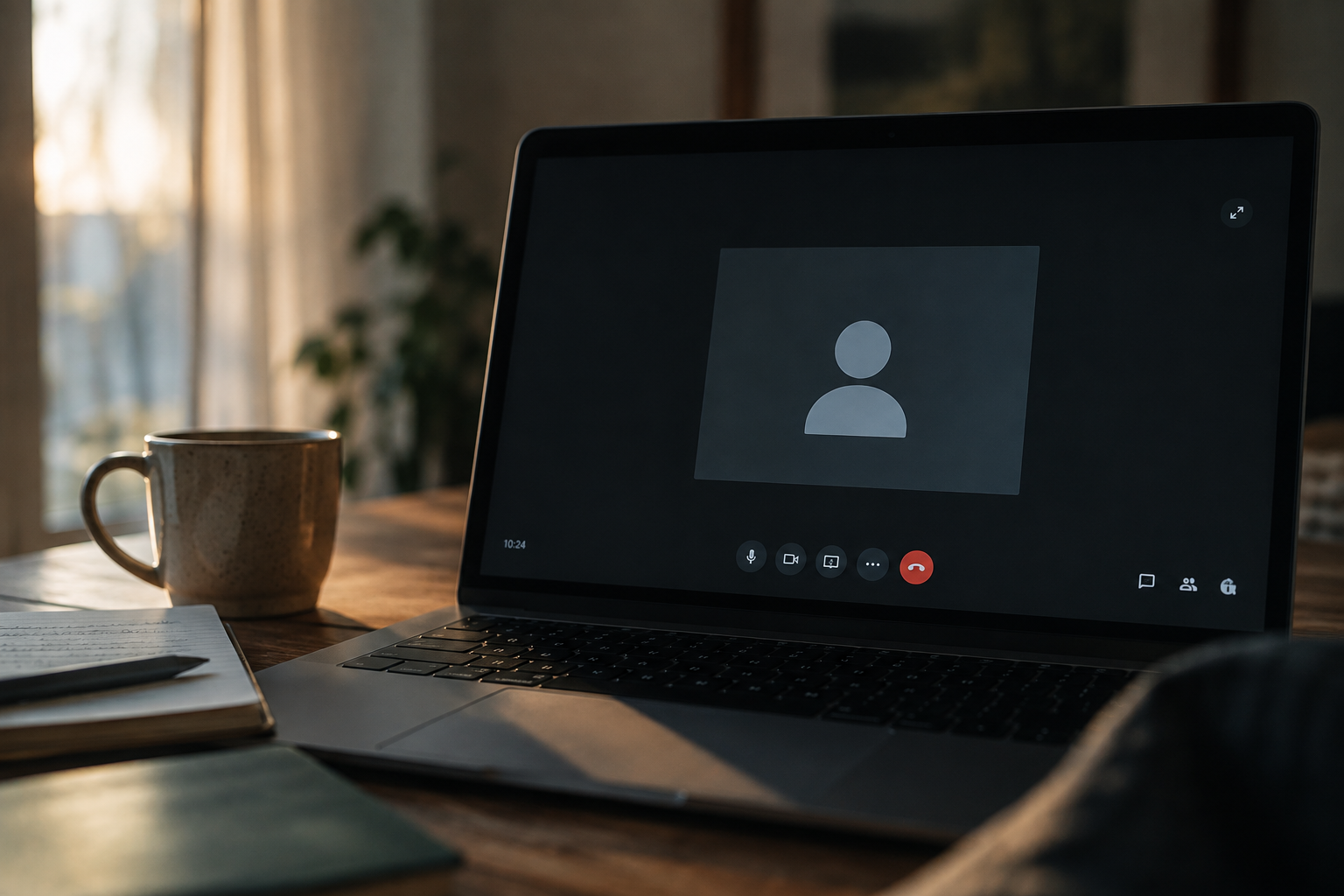
My laptop knew the routine better than I did.
At seven each morning I opened it as always: screen blinked, operating system booted, colours came alive, waiting for the next command.
But I had stopped arriving.
My body was there at the kitchen table, laptop open, but my mind was somewhere else. The machine could respond. I could not.
This became my morning for weeks. I was now halfway through a medically sanctioned leave from work. Unable to fully process the change in circumstances, I still woke each weekday as if duty awaited. But instead of purposeful delivery, I sat there unable to respond.
This was my life for more than a month: a kind of profound shell-shock that had reduced me to grappling not with a task, but with a self that could no longer perform.
The professional routines that once confirmed me, now felt vacant. With the usual measures suddenly out of reach: contribution, competence, value, productivity, I was staring down the barrel of a loss of self.
Initially, the warm hum of a laptop was comforting. Watching it boot was part of a ritual so ingrained it ran on without me. Even on leave I was performing the motions: wake, coffee, laptop, wait.
But the comfort quickly curdled.
Each morning the machine could show up, it was ready, it responded, but I could not.
Over the weeks, I had become increasingly aware of the resilience and capability I felt I had lost, and a deeper fear began to take root. I wasn’t simply unable to perform. I felt redundant, misaligned, displaced and unnecessary.
This feeling hit me like a hammer because it was painfully familiar. It was the same loss of identity, value and productivity that had driven me toward stress leave in the first place.
As I continued to show up every morning dutifully at my kitchen table - waiting for miracle, or revelation, to strike - the latter made its appearance: I was beginning to understand the root of my despair: a profound fear.
I was confronting my own sense of obsolescence.
For over a decade, I had painstakingly built a career close to technology and data. I had taken leaps of faith, calculated risks, and battled imposter syndrome in more than one setting to get there. Then, almost overnight, a reorganization of tectonic magnitude shifted my day-to-day reality. I would pivot into managing a team responsible for paper records, documents and compliance.
Suddenly, I was immersed in the very analog machinery I had spent much of my career avoiding. The systems, processes and language of records management were foreign to the professional world I had built for myself. And now, almost overnight, they had become my universe.
The reversal felt dystopian, like stepping into a life I had never chosen.
The rupture was so complete that for five weeks I sat shell-shocked at my kitchen table, staring at a machine that could still perform while I could not.
I had spent that time wondering whether I had become obsolete.
But underneath that fear was a question I had not yet learned to answer:
If the things I had mistaken for myself could vanish so quickly, what remained?
How a sudden reorganization left me questioning who I was without the work that had defined me.

My laptop knew the routine better than I did.
At seven each morning I opened it as always: screen blinked, operating system booted, colours came alive, waiting for the next command.
But I had stopped arriving.
My body was there at the kitchen table, laptop open, but my mind was somewhere else. The machine could respond. I could not.
This became my morning for weeks. I was now halfway through a medically sanctioned leave from work. Unable to fully process the change in circumstances, I still woke each weekday as if duty awaited. But instead of purposeful delivery, I sat there unable to respond.
This was my life for more than a month: a kind of profound shell-shock that had reduced me to grappling not with a task, but with a self that could no longer perform.
The professional routines that once confirmed me, now felt vacant. With the usual measures suddenly out of reach: contribution, competence, value, productivity, I was staring down the barrel of a loss of self.
Initially, the warm hum of a laptop was comforting. Watching it boot was part of a ritual so ingrained it ran on without me. Even on leave I was performing the motions: wake, coffee, laptop, wait.
But the comfort quickly curdled.
Each morning the machine could show up, it was ready, it responded, but I could not.
Over the weeks, I had become increasingly aware of the resilience and capability I felt I had lost, and a deeper fear began to take root. I wasn’t simply unable to perform. I felt redundant, misaligned, displaced and unnecessary.
This feeling hit me like a hammer because it was painfully familiar. It was the same loss of identity, value and productivity that had driven me toward stress leave in the first place.
As I continued to show up every morning dutifully at my kitchen table - waiting for miracle, or revelation, to strike - the latter made its appearance: I was beginning to understand the root of my despair: a profound fear.
I was confronting my own sense of obsolescence.
For over a decade, I had painstakingly built a career close to technology and data. I had taken leaps of faith, calculated risks, and battled imposter syndrome in more than one setting to get there. Then, almost overnight, a reorganization of tectonic magnitude shifted my day-to-day reality. I would pivot into managing a team responsible for paper records, documents and compliance.
Suddenly, I was immersed in the very analog machinery I had spent much of my career avoiding. The systems, processes and language of records management were foreign to the professional world I had built for myself. And now, almost overnight, they had become my universe.
The reversal felt dystopian, like stepping into a life I had never chosen.
The rupture was so complete that for five weeks I sat shell-shocked at my kitchen table, staring at a machine that could still perform while I could not.
I had spent that time wondering whether I had become obsolete.
But underneath that fear was a question I had not yet learned to answer:
If the things I had mistaken for myself could vanish so quickly, what remained?